What is plastic compounding used for?
Plastic compounding can help manufacturers achieve specific colours, performance properties and material...
Read More

Plastic compounding is used to modify and enhance plastic materials so they have the colour, appearance, processing characteristics or performance properties required for a particular application.
Rather than relying on a standard polymer alone, compounding allows manufacturers to create a material tailored to what the finished product actually needs to do.
From achieving a precise colour to incorporating UV stabilisers, anti-static agents, flame retardants or fillers, plastic compounding plays an important role across a wide range of manufacturing applications.
But what exactly is plastic compounding, and when might you need it?
Plastic compounding is the process of combining a base polymer with other materials to create a formulation with specific characteristics.
Depending on the requirements of the application, these materials could include:
These ingredients are processed together to create a uniform compound that can then be used by a manufacturer to produce the finished component or product.
The exact formulation depends on what the customer needs the material to achieve.
There isn’t one single reason to compound plastic. Instead, the process can be used to address a variety of colour, material and manufacturing requirements.
One of the most common uses of plastic compounding is to achieve a particular colour.
This could be a brand colour, a shade required for a product range or something developed specifically for a new application.
Specialist colour compounding allows the colour to be incorporated throughout the material, with a focus on achieving good dispersion, accuracy and consistency.
At Plascolour, colour is at the heart of our compounding expertise. We work with customers to develop compounds around their individual colour and material requirements.
Sometimes a plastic needs to do more than simply look right.
Functional additives can be incorporated during the compounding process to introduce or enhance particular characteristics.
Depending on the polymer and application, this can include additives such as:
UV stabilisers – helping protect materials exposed to ultraviolet radiation.
Anti-static agents – used where the build-up of static electricity needs to be reduced.
Flame retardants – incorporated where specific flame-retardant properties are required.
By considering these requirements as part of the formulation, manufacturers can source a compound developed around the demands of the finished application.
Plastic compounding can also be used to introduce fillers into a polymer.
At Plascolour, our capabilities include working with fillers such as minerals and glass.
Fillers may be incorporated to modify particular characteristics of the material depending on the requirements of the end product.
The type and quantity of filler required will depend on the polymer, manufacturing process and intended application, which is why specialist formulation is important.
Dispersion is an important part of producing a consistent plastic compound.
Pigments, additives and fillers need to be effectively distributed throughout the polymer rather than concentrated unevenly within the material.
Good dispersion can contribute to more uniform colour and material characteristics, helping manufacturers achieve greater consistency when the compound reaches production.
This is one of the reasons specialist equipment and compounding expertise can be valuable.
Plastic compounding can also play a role in helping manufacturers make better use of existing materials.
If a manufacturing process generates suitable clean regrind, that material may be capable of being processed and returned to use rather than being treated as waste.
At Plascolour, our contamination-free toll compounding capabilities support customers looking to reuse suitable clean regrind.
This can help manufacturers work towards more circular production processes while maintaining a focus on the consistency and quality of the material being returned to production.
Not every manufacturer has the equipment, capacity or in-house expertise required to carry out specialist compounding.
Outsourcing plastic compounding allows businesses to access specialist machinery and materials knowledge without investing in additional equipment themselves.
It can also help free up internal capacity, reduce wear on existing equipment and allow production teams to concentrate on their core manufacturing processes.
At Plascolour, we work with customers who require both specialist colour compounding and toll compounding support.
Plastic compounds are used across a broad range of industries because plastic components can have very different requirements depending on where and how they will be used.
Applications can range from consumer products and packaging to automotive, industrial and other specialist manufactured components.
For example, one application might prioritise precise and repeatable colour, while another could require UV resistance for outdoor use.
In many cases, several requirements need to be considered within the same formulation.
That’s why plastic compounding isn’t simply about adding ingredients to a polymer. It’s about understanding the end application and developing the material accordingly.
There are several reasons why a manufacturer may choose to work with a specialist plastic compounder rather than carrying out the process in-house.
Outsourcing can provide access to:
It can also reduce the investment required in specialist equipment and expertise internally.
For businesses that only require particular compounds periodically or in smaller quantities, outsourcing can offer considerably more flexibility.
Not necessarily.
Large minimum order quantities can make specialist compounding impractical for trials, product development and lower-volume applications.
At Plascolour, our minimum compound order quantity starts from just 25kg.
This provides greater flexibility for customers who need a specialist formulation without committing to unnecessarily large quantities.
Combined with our focus on fast turnaround, it means we can support everything from smaller specialist requirements to ongoing production needs.
The right compound depends on far more than the colour you want to achieve.
Before speaking to a compounder, it’s useful to consider:
A specialist compounder can then work with you to understand these requirements and determine an appropriate formulation and processing approach.
At Plascolour, we specialise in developing compounds around the individual requirements of our customers.
From precise colour matching and specialist colour compounding to functional additives, fillers and contamination-free toll compounding, our team combines materials knowledge with specialist processing capabilities.
And with minimum compound orders starting from 25kg, you don’t need to commit to huge quantities to access specialist support.
Have a material or compounding challenge? Speak to the Plascolour team about what you need your compound to achieve.
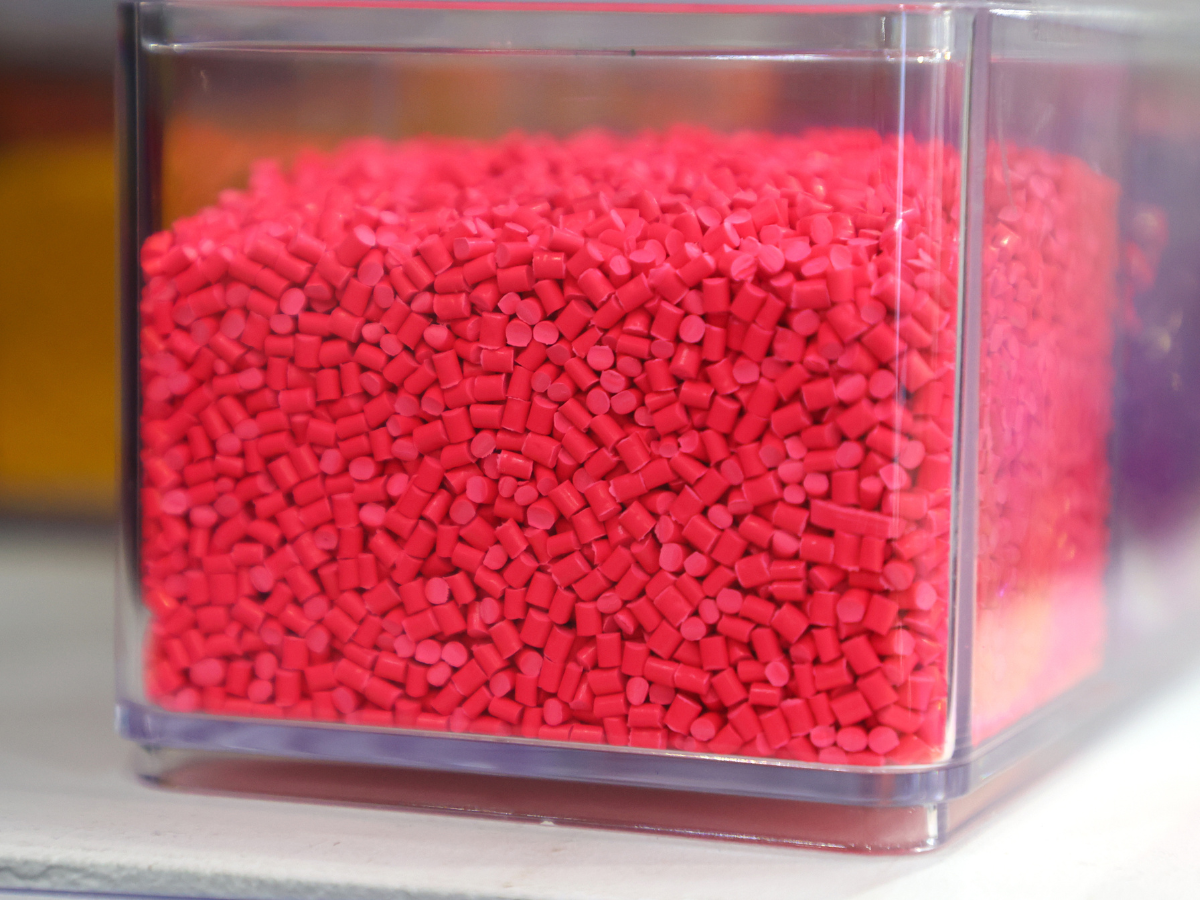
Plastic compounding can help manufacturers achieve specific colours, performance properties and material...
Read More
Looking for recycled plastic compound suppliers in the UK? Discover what to...
Read More
Discover the differences between colour compounds and masterbatch, and learn how to...
Read More