What is plastic compounding used for?
Plastic compounding can help manufacturers achieve specific colours, performance properties and material...
Read More

When it comes to colouring plastic products, there isn’t a single solution that fits every application. Two of the most widely used methods are colour compounds and colour masterbatch, and each offers distinct advantages depending on your manufacturing process and product requirements.
Understanding the differences between the two can help manufacturers make informed decisions, improve production efficiency and achieve the best possible results.
Colour masterbatch is a concentrated blend of pigments dispersed within a carrier resin. During the moulding or extrusion process, it is mixed with natural polymer to produce the required colour.
Masterbatch is an excellent solution for many manufacturers, offering flexibility and the ability to introduce colour during production. It’s widely used across industries and is particularly beneficial where manufacturers require versatility across multiple colours or products.
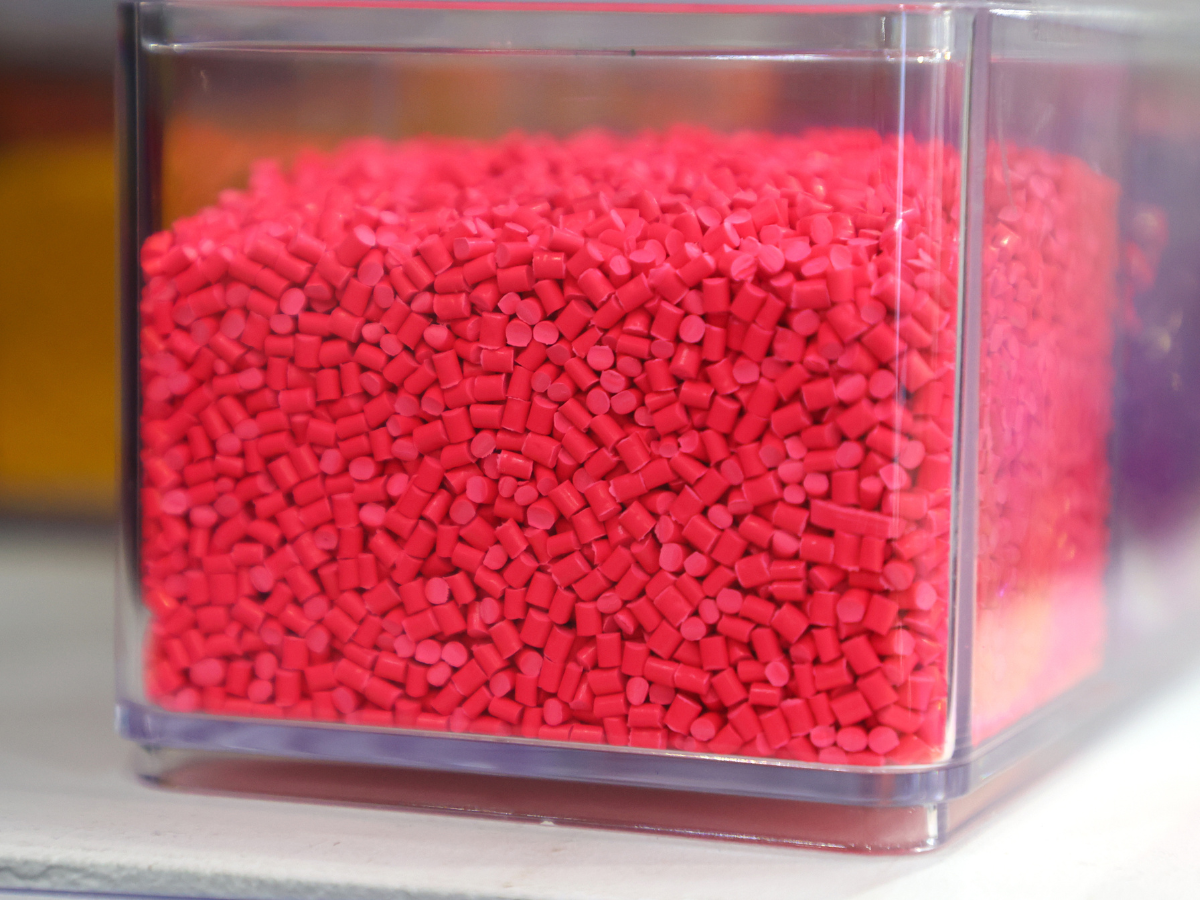
A colour compound is a ready-to-process material where the polymer and colour have already been combined during the compounding process.
Instead of adding colour during production, the finished compound arrives pre-coloured and ready for use. This provides manufacturers with a material specifically developed for their chosen polymer, processing conditions and end application.
The biggest distinction lies in when the colour is introduced.
With masterbatch, colour is added during the manufacturing process.
With colour compounds, the colouring process has already been completed before the material reaches the production line.
Neither approach is inherently better than the other—they simply solve different manufacturing challenges.
For many manufacturers, bespoke colour compounds provide advantages where consistency and technical performance are particularly important.
These can include:
Because every pellet is produced as part of a fully compounded material, manufacturers can benefit from excellent batch-to-batch colour consistency.
Colour compounds are developed specifically for the chosen polymer and application, helping to provide predictable processing characteristics throughout production.
Carefully controlled compounding helps achieve uniform pigment distribution, contributing to a consistent appearance and high-quality finished product.
A bespoke compound can also be developed to meet the specific requirements of the application, whether that’s durability, UV resistance, processing characteristics or other performance considerations.
The right choice depends entirely on your application.
If flexibility and adding colour during production are your priorities, colour masterbatch may be the ideal solution.
If you’re looking for a ready-to-process material developed specifically for your product, a bespoke colour compound could be the better fit.
The most important factor isn’t choosing one over the other—it’s selecting the solution that best supports your manufacturing process, quality requirements and production goals.
At Plascolour, we specialise in bespoke colour compounding, developing high-quality colour compounds tailored to each customer’s exact requirements.
Using advanced compounding technology and extensive materials expertise, we help manufacturers achieve:
Whether you’re developing a new product or refining an existing one, our experienced team will work with you to deliver a colour solution designed around your manufacturing needs.
Not sure which solution is right for your application?
Our team is always happy to discuss your project and help you identify the most suitable approach based on your material, processing method and performance requirements.
Plastic compounding can help manufacturers achieve specific colours, performance properties and material...
Read More
Looking for recycled plastic compound suppliers in the UK? Discover what to...
Read More
Discover the differences between colour compounds and masterbatch, and learn how to...
Read More